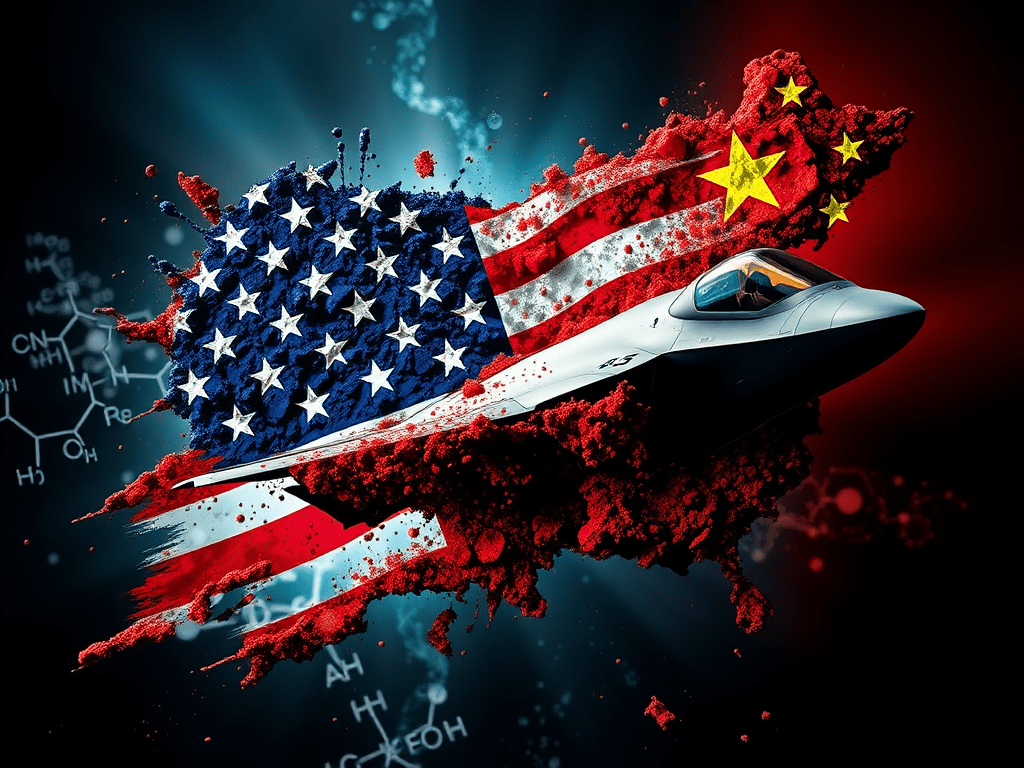
How did the U.S. become dependent on China for Rare Earth Elements (REEs)? Welcome fellow cultural nomads to the “What the Falafel?” series, where we explore sociocultural and geopolitical anomalies and try to make sense of them together.
This edition explores the U.S.’s dependence on China for Rare Earth Elements (REEs), which are critical to U.S. defence capability. REEs are used in F-35 stealth fighters, night-vision goggles, and nuclear reactor control rods. According to the U.S. Geological Survey, in 2019, China was responsible for 80% of REE imports.
This degree of reliance might be acceptable between allies. But would anyone consider China a U.S. ally? In September 2024, Frank Kendall, Secretary of the Air Force, said at an Air & Space Forces Association convention:
I’ve been closely watching the evolution of [China’s] military for 15 years. China is not a future threat; China is a threat today.
So, how did the U.S. become so reliant on China for these strategically critical minerals? Did they drop the ball due to a complex mix of economic, political, and environmental factors? I’m no expert on this topic, so I’ll be leaning on you, my fellow cultural nomads, to share your perspectives.
What are Rare Earth Elements?
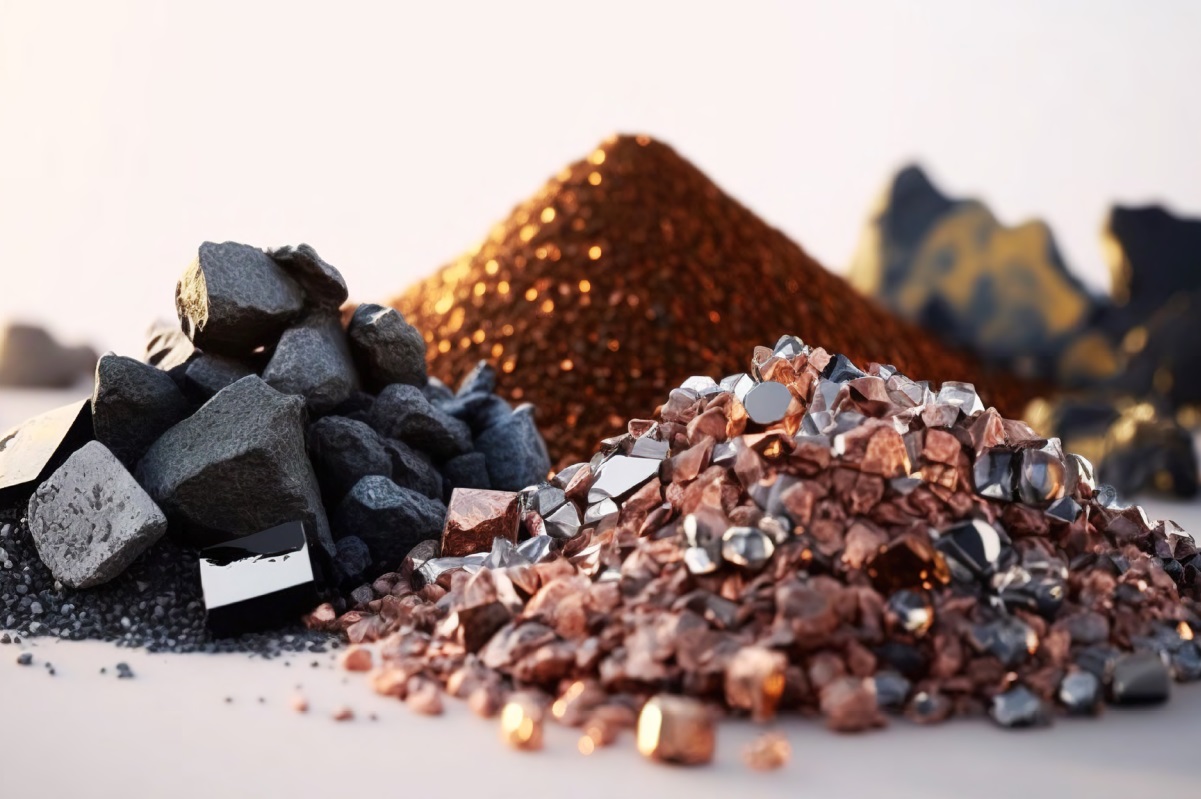
Rare earth elements (REEs) comprise 17 chemical elements, 15 of which are commercially relevant and are found in natural deposits worldwide. REEs are more common than their name implies, but extracting, processing, and refining them presents various technical, political, and environmental challenges.
After being extracted from mines, REEs are sent to separation facilities where they are separated from other minerals. They are processed into oxides, metals, and then magnets, which are used in various products, including missiles, wind turbines, medical devices, power tools, mobile phones, and motors for hybrid and electric vehicles.
China’s Domination of REE
| Production | China produces about 70% of the world’s rare earth ore. |
| Processing | China processes nearly 90% of the world’s rare earths. |
| Control | China controls over 85% of the processing capacity for significant rare earths. |
| Technology | China has filed over 25,000 rare earth patents, compared to the US’ 10,000. |
The U.S. remains highly reliant on Chinese production of REEs through direct imports. This reliance is also due to the predominance of Chinese materials in global supply chains.
Military use of REEs
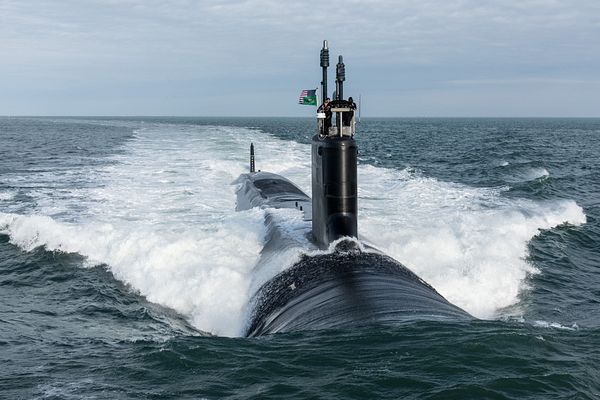
REEs play a critical role in modern military technology. They’re essential for electronic warfare systems, targeting radars, and the electric motors in stealth fighters such as the F-35. Submarines and naval ships rely on REEs in their sonar systems, enabling effective detection and navigation.

REEs are essential to night-vision goggles and communication technologies. They also contribute to precision targeting and the development of cutting-edge laser weapons.
So, how the falafel did the U.S. allow themselves to become so reliant on China for such strategically critical minerals?
History of REE Mining and Production
From the mid-1960s to the 1980s, the U.S. controlled the REE market mainly through Mountain Pass. This mine, in the California desert, is operated by the Molybdenum Corporation of America.
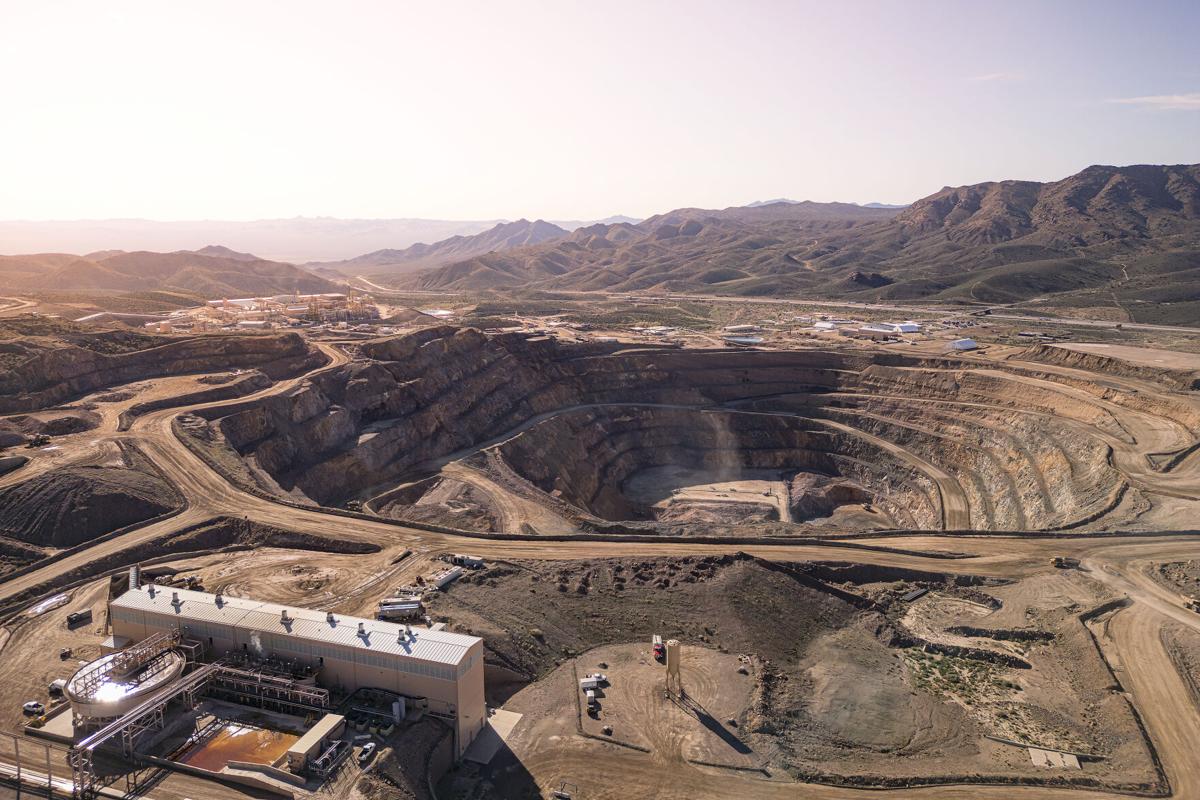
However, cost, environmental, and regulatory pressures resulted in companies exploring alternatives or moving their industries to China. While China was initially slower to develop its REE operations, this changed in the mid-1970s, coinciding with the closing of mines in the U.S.
Additionally, according to a 2018 Department of Defense report, China “strategically flooded the global market” with REE at lower prices to discourage current and future competitors. Analysts view this as a failed U.S. strategy, as China’s low costs, driven by subsidies and lax standards, outpaced the U.S. REE industry.
Koray Kose, Senior Director at Gartner, explains how the U.S. prioritised profit over security:
If the material specification fits, and the price is a dollar better, then you go for the dollar better.
How did that workout?
Meanwhile, Japan shut down several rare-earth facilities and transferred its technology to China. This further boosted China’s market dominance and increased other countries’ reliance on Beijing for supply. This dependence on Chinese processors and environmental concerns resulted in suspending production at the Mountain Pass mine in the U.S. in 2002.
Tiago Tecelão Martins of the Geopolitical Monitor argues this strategic failure was possible because it occurred:
… during the phase of American unipolarity, in which China was still not seen as a threat by US officials.
I find that hard to believe. Since 1949, there’s been enough tension between China and the U.S. to raise concerns about U.S. dependence on China for REEs.
In the 1990s, China dominated REE production, controlling 85-95% of the global supply. With its vast resources, China strategically harnessed rare earths to drive technological advancements in space, defence, and energy sectors.
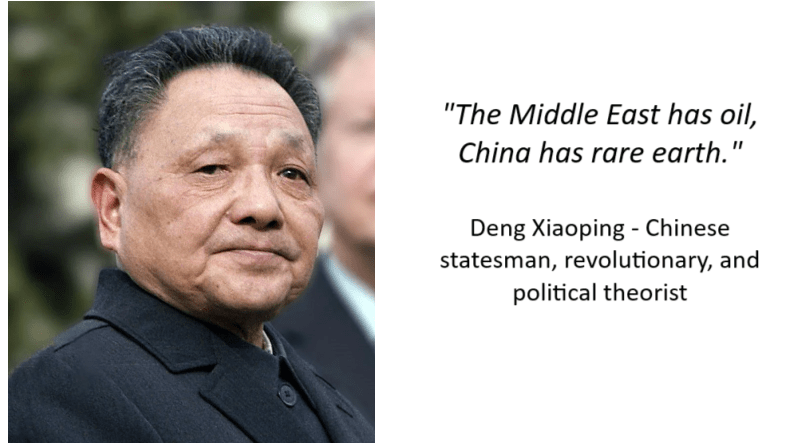
By 2010, China was responsible for 95% of the world’s rare earth oxides.
Diplomatic tensions between China and Japan escalated following an incident between a Chinese fishing trawler and two Japanese Coast Guard. In response, China suspended its rare earth exports to Japan. This triggered a price surge of up to 500% in 2011 and 2012.
This sparked growing concern about China’s REE dominance, leading to the initiation of over 200 new projects worldwide to diversify the supply chain. As a result, the Mountain Pass mine in the USA reopened in 2012. It now accounts for 15% of global rare earth production, marking a strategic effort to lessen dependence on China.
Current State
Concerned about this dependence, former U.S. President Donald Trump signed an executive order on rare earths and increased funding for domestic companies. The Biden administration built upon these efforts by including rare-earth projects in the Defense Production Act and expanding the nation’s rare-earth stockpile.
Despite these efforts, James Kennedy the president of ThREE Consulting, was quoted by Foreign Policy as saying:
For 15 years now, the United States has been pursuing or promoting or pushing policies, and every one of them has been an abysmal failure.
Foreign Policy also quoted Raytheon chief Greg Hayes as saying:
More than 95% of rare-earth materials or metals come from, or are processed in, China. There is no alternative. If we had to pull out of China, it would take us many, many years to reestablish that capability either domestically or in other friendly countries.
So, fellow cultural nomads, what do you think? Did the U.S. drop the ball due to a complex mix of financial, environmental, and regulatory pressures? Do you believe no one raised the alarm because the U.S. dominated the world and China wasn’t considered a threat?
Let me know your thoughts in the comments.


 The Cultural Nomad
Leave a reply to eelleissy Cancel reply