
Content Note: This blog discusses child sexual abuse, institutional failure, and the psychological and social impacts of these harms. It may evoke strong emotional responses, particularly for survivors of abuse and their families. Readers are encouraged to engage at their own pace and prioritise their wellbeing.
In my work as a psychologist, I’ve spent much of my professional life alongside individuals, families, and communities impacted by Childhood Sexual Abuse (CSA). Had I not entered this field, I doubt I could truly comprehend the depth and reach of its harm.
CSA doesn’t simply injure a moment in time; it reshapes the neurobiology of the developing child, fractures bonds within family systems, and leaves behind shame and guilt that linger like ghosts, quietly haunting relationships for generations. At a community level, I’ve watched collective identities shatter, meaning dissolve, and shared purpose erode in the wake of its exposure.
Once you see this, you cannot unsee it. Once you understand it, you cannot unknow it.
Now, I find myself increasingly saturated by news coverage, speculation, and conspiracy about the Epstein files. Much of the public and media discourse has centred on procedural and political concerns:
- whether the files will be released in full
- who’s named
- what legal guilt they may or may not confirm, and
- how they might be weaponised within partisan conflict.
Yet within the relentless churn of the 24-hour news cycle, there’s been remarkably little space given to a more fundamental question:
What does this moment, particularly these revelations and the way they’re being handled, mean for the moral and cultural foundations of Western liberal democracies?
I don’t know the answer… I think a part of me is afraid to. And I find myself wondering whether the current discourse functions as a defence, an attempt to stay focused on intrigue and argument rather than confront what this may signify.
Those who know me well know that when I reach this kind of impasse, I turn to writing and conversation. Not to offer conclusions, but to try to make sense of something I can feel before I can fully articulate it.
This blog is an attempt to do just that. It’s not a declaration, but an inquiry. It examines the impact of CSA on individuals, families, and communities, and then applies those insights to assess what the Epstein files may signify for Western liberal societies more broadly.
And it’s also an invitation to you, the reader, to reflect alongside me, and to share what this moment stirs in you as well.
The Impact of CSA on the Individual
One of the most confronting things I’ve learned through my work is that CSA quite literally shapes the developing brain. As Bruce Perry and Bessel van der Kolk have written extensively, a child growing up in an environment of chronic threat does not have the luxury of developing for curiosity, connection, or creativity. Instead, their nervous system adapts for survival. The stress response is activated repeatedly, training the brain to scan constantly for danger.
Over time, this can leave a child and later an adult living in a body that remains on high alert, or, conversely, one that shuts down to cope. Trauma is not stored as a coherent story so much as it’s carried in the body in startle responses, emotional overwhelm, dissociation, and a persistent sense of unease that can be difficult to name.
From a developmental standpoint, CSA interrupts some of the most fundamental tasks of growing up. Judith Herman describes how trauma during childhood fractures the natural progression toward autonomy, identity, and trust. Instead of gradually learning who they are and how they belong in the world, children who have experienced abuse often develop around secrecy, compliance, or self-protection. Many learn to manage the emotions of others long before they’re able to understand their own.
These adaptations may help the child survive in the short term, but they often come at the cost of spontaneity, playfulness, and a stable sense of self. Later in life, survivors may struggle with intimacy, boundaries, and self-trust, not because they’re “damaged,” but because their development occurred under conditions that required extraordinary psychological sacrifice.
Julian D Ford provides a confronting reflection about the impact of CSA on the developing child:
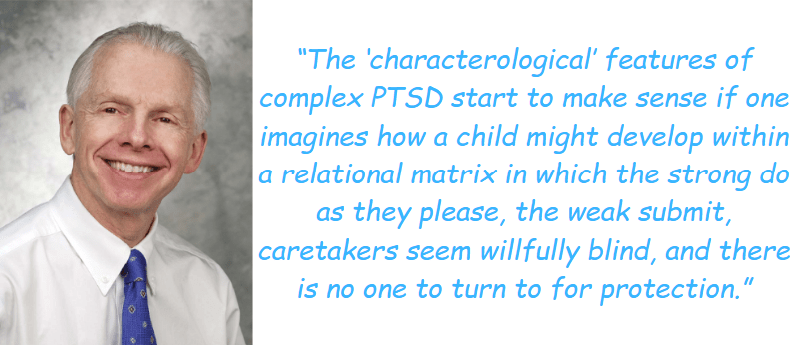
Over time, these experiences solidify into what attachment theorists call internal working models, which are deeply held beliefs about the self, relationships, and the world. Survivors of CSA often come to carry meanings such as I’m not safe, I’m unworthy, I’m responsible for what happens, or my needs do not matter. Relationships may be experienced as unpredictable, unsafe, or untrustworthy. Importantly, these beliefs are not irrational.
As Herman and van der Kolk both emphasise, they’re logical conclusions drawn in an environment where betrayal, secrecy, and powerlessness were real. These internal maps quietly shape how survivors interpret events, experience relationships, and make sense of authority, often long after the original abuse has ended.
While these impacts are often described as though they reside solely within the individual, CSA never exists in isolation. A child develops within a family system, and the adaptations they’re forced to make don’t occur in a vacuum. Silence, denial, blame, and fractured trust do not merely surround the abuse, they become part of the family’s emotional architecture.
To understand the full impact of CSA, we must therefore widen the lens beyond the individual and consider what happens to families when trauma enters and is often left unspoken within the system itself.
The Impact of CSA on Family Systems
CSA does not only wound the child; it reverberates through the entire family system. Whether abuse is disclosed early, discovered years later, or never spoken of at all, families often reorganise around its presence. Silence, secrecy, and denial frequently emerge as adaptive strategies. Not because families are indifferent or malicious, but because fully confronting the reality of abuse can feel overwhelming or destabilising.
When abuse is perpetrated by someone known and trusted, the rupture is particularly profound: the very structures meant to provide safety and protection are compromised, leaving the family system disoriented and fragmented.
Power dynamics play a critical role in how families respond to CSA. When an abuser is protected, minimised, or implicitly prioritised over the child (whether to preserve family stability, reputation, or a sense of normality) the family itself becomes unsafe. Herman describes this dynamic as one of betrayal, observing that:
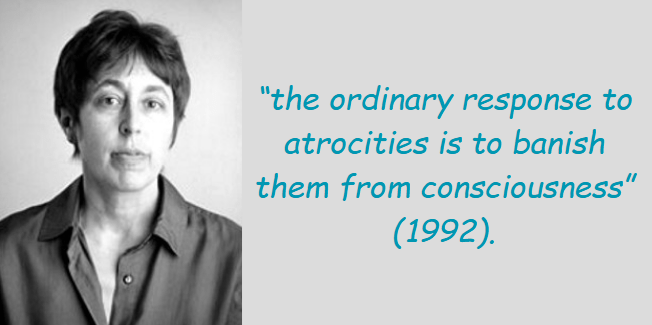
In such contexts, the harm of the original abuse is compounded by the relational injury that follows. The child learns that truth is dangerous, that protection is conditional, and that power outweighs vulnerability.
Other family members are often drawn into this dynamic as well, pressured (explicitly or implicitly) to collude with silence or denial. As family systems theorists have noted, systems under threat tend to organise around maintaining homeostasis, even when that stability comes at the cost of safety (Minuchin, 1974). Over time, the family may prioritise appearances or cohesion over accountability and repair.
Parents/caregivers are themselves profoundly affected, though their experiences are often overlooked. Research indicates that non-offending parents/caregivers frequently experience intense guilt, shame, rage, helplessness, or grief following disclosure (Alaggia, 2004). These emotions can be difficult to process while simultaneously trying to support a traumatised child.
Some parents/caregivers respond with hypervigilance and anxiety, others with emotional withdrawal, minimisation, or defensiveness. Siblings, too, are impacted, often feeling confused, neglected, resentful, or burdened by an atmosphere of tension and secrecy they cannot fully understand. Within this environment, family roles may shift in response to the trauma. These adaptations, initially protective, can harden into enduring relational structures over time.
Perhaps most devastating is the way unresolved trauma moves across generations. When abuse is not acknowledged, named, and repaired, it is often transmitted indirectly through relational patterns rather than explicit narratives. Although the precise mechanisms of intergenerational transmission are still being studied, research suggests that it can occur through emotional unavailability, rigid control, chronic anxiety, or pervasive difficulties with boundaries and trust (Fraiberg et al., 1975; Schechter et al., 2005).
Herman captures this process succinctly:
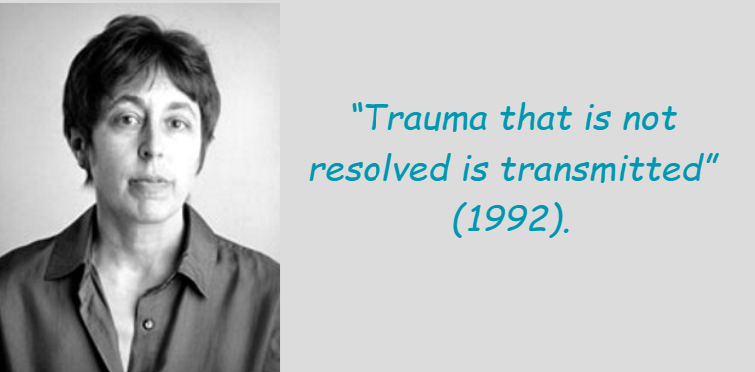
Seen through this lens, CSA is not a single event but a destabilising force that can echo across time. Families do not simply “move on” from trauma; they organise around it, often unconsciously. Healing, when it occurs, requires more than individual treatment. It calls for truth-telling, accountability, and relational repair within the family system itself. Without these processes, the effects of abuse risk becoming part of a family’s inheritance. Passed down not through stories openly told, but through patterns silently lived.
What becomes clear is the patterns we recognise in families affected by CSA do not disappear as systems grow larger.
They scale.
It is here that the lens must widen again, from families to the communities and institutions that shape collective life. What begins as a family’s unspoken accommodation of abuse can, at the level of institutions and communities, become a collective moral failure. When those with power are shielded while those harmed are asked (implicitly or explicitly) to endure, the system itself becomes unsafe.
The Impact on CSA on Communities
My early exposure to CSA was almost entirely at the individual and family level. I was unprepared for how devastating it was, how thoroughly it could fracture a child’s sense of self and reorganise family life around secrecy, fear, and survival. But much later in my career, I began to witness what happens when CSA is exposed within a community. Once again, I was shaken to my core.
The impact at the community level is shattering in a different way. What is damaged here is not only individual wellbeing or family functioning, but collective identity itself:
- relationships
- shared meaning
- trust in leadership, and
- a community’s sense of who it believes itself to be.
When abuse comes to light in a school, faith organisation, sporting club, or close-knit community, the initial response is often painfully predictable: shock, followed quickly by denial, defensiveness, and then polarisation. People struggle to reconcile what they believed about their community with what has been revealed.
“This can’t be true.” “Not here.” “Not them.”
The exposure of abuse creates a moral rupture, a moment where the story a community tells about itself no longer holds.
One of the most profound injuries is the loss of trust in leadership. When those in positions of authority are implicated through action, inaction, or silence, the sense of betrayal can be overwhelming. Survivors and community members alike are left grappling with a deep moral injury that is often expressed in the same stunned sentence:
“We thought we were safe here, we thought we could trust you.”
Safety was assumed, delegated, and entrusted. Its collapse reverberates far beyond the original acts of abuse.
As the reality settles in, communities frequently fragment. Fault lines appear between those calling for truth, accountability, and structural change, and those who want to minimise, contain, or “move on.” These divisions are not simply differences of opinion; they reflect fundamentally different ways of managing threat and shame.
For some, accountability feels like the only path forward. For others, it feels like an existential danger to the community’s survival. Relationships fracture under the strain, and the very networks that once fostered belonging can become sites of conflict and exclusion.
This is where the psychological impact of CSA clearly intersects with civic life. An ecological lens helps consider the ripple effects of CSA exposure. The trauma extends outward, affecting non-offending parents, siblings, extended family members, and community members. Particularly those with unresolved or undisclosed histories of abuse who may be retraumatised by public disclosures.
Shame often spreads beyond the family to the wider community, parenting capacity can be compromised under chronic stress, and conflict escalates within families, organisations, and neighbourhoods. Over time, many people withdraw from community life altogether, leading to isolation, disengagement, and a thinning of social bonds.
Perpetrators and their families are also situated within this ecological web. Alongside legal consequences such as prosecution or imprisonment, they may experience profound shame, exclusion, and loss of community connection. While accountability is essential, the social fallout can further destabilise already-fractured communities, particularly when responses are reactive rather than thoughtfully structured.
Taken together, these dynamics can erode social and cultural participation across generations. Collective trauma, unresolved grief, compromised caregiving, and entrenched conflict all contribute to long-term community harm. As the Healing Foundation (2018) has argued, CSA can diminish the social fabric itself if responses fail to address impacts across individuals, families, perpetrators, and the wider community.
Seen this way, CSA exposure is not just a psychological crisis, it’s a civic one. Communities, like families, do not simply recover on their own. They reorganise around trauma unless deliberate efforts are made toward truth, accountability, repair, and prevention. This is the bridge between psychology and public life: understanding that how a community responds to abuse becomes part of its legacy, shaping whether it remains fractured by fear and silence or moves, however painfully, toward integrity and collective care.
If CSA at the individual, family, and community levels teaches us anything, it is that exposure without accountability, repair, and structural change does not resolve harm, but it amplifies it. With this framework in mind, it becomes possible to ask a larger and more unsettling question:
what happens when evidence of sexual exploitation and abuse implicates not just families, organisations, or local communities, but powerful institutions and individuals embedded within Western liberal democracies themselves?
The Epstein Files: Scaling the Lens
The emergence and ongoing handling of the Epstein files invites precisely this inquiry. Rather than viewing them as an isolated scandal or a morbid fascination with elite wrongdoing, I want to approach them through what we already know about the ecology of CSA. How societies respond to these revelations through denial, deflection, transparency, or accountability will shape public trust, collective identity, and faith in democratic institutions.
Just as families and communities are reorganised by unacknowledged abuse, nations too may be reshaped by how they confront, or fail to confront, sexual violence at the highest levels of power. What is at stake is not only justice for victims, but the moral credibility of the systems that claim to protect the vulnerable.
Impact on Survivors of CSA and their Families
Collective Retraumatisation Event: For many survivors of CSA and their families, the Epstein files function as a collective retraumatization event. Graphic details and pervasive coverage can reactivate trauma, not through curiosity but through exposure. This can reactivate fear, helplessness, and loss of control. Even without explicit descriptions, the atmosphere of spectacle erodes emotional safety and overwhelms hard-won coping strategies.
Survivors Positioned as Peripheral: Public speculation intensifies this harm. Survivors are forced to watch their experiences debated, sensationalised, or folded into conspiracy narratives, reinforcing the sense that abuse is something to be consumed rather than understood. When trauma becomes content, survivors are positioned as peripheral to the story… a source of outrage, but not for care or justice.
Loss of Faith in Accountability: Seeing powerful figures evade consequences carries a deep psychological cost. Many survivors already hold trauma-shaped beliefs such as “the powerful are protected” and “speaking up doesn’t matter.” When these beliefs appear confirmed by events, hope in legal or social redress diminishes, and silence can feel safer than truth.
Impact on General Population
Breakdown of Institutional Trust: Beyond survivors, the Epstein files accelerate a broader erosion of trust in legal systems, media, and political leadership. When accountability appears selective, institutions no longer feel protective or impartial, but self-serving. What emerges is not shock, but grim confirmation that systems designed to protect the vulnerable instead protect themselves.
Loss of a Shared Moral Narrative: Repeated exposure to revelations without resolution breeds cynicism and moral exhaustion. Outrage becomes performative, hope feels naïve, and disengagement starts to resemble self-protection. This normalisation of cynicism corrodes civic life by making ethical concern feel futile. This undoubtedly impacts people’s behaviour in personal and professional domains – why should I act moral when no one else does?
Impact on Western Liberal Democracies
Breakdown of Legitimacy: At the level of a nation and more broadly, Western liberal democracies, the Epstein files raise questions about legitimacy itself. When rules appear not to apply equally, when wealth and status seem to insulate individuals from scrutiny or consequence, the moral authority of Western institutions erodes.
The Normalisation of Moral Hypocrisy: As legitimacy erodes, moral hypocrisy becomes normalised. Public institutions continue to invoke justice, human rights, and the protection of the vulnerable. However, the masses simply disengage, believing the actions of western institutions suggest a different hierarchy of values. This will erode civic cooperation, upon which progress is built.
Loss of Faith in Enlightenment Ideals: The cumulative effect is a loss of faith in core civilisational promises: justice, progress, and universal human rights. When accountability appears selective, these ideals begin to feel conditional rather than foundational. What was once understood as a moral direction of Western liberal democracies becomes an empty narrative. The political and societal momentum required to improve the lives of people grinds to a halt.
Culture Wars / Partisan Conflict as Coping Mechanism: Faced with this dissonance, societies often respond with collective dissociation. Avoidance and distraction through perpetual culture wars and partisan conflict function as coping mechanisms. A way to redirect attention from realities that feel too destabilising to confront directly. While in the short-term, they may serve as a coping mechanism, they will damage Western liberal societies beyond repair.
In conclusion…
Trauma that is not processed does not disappear. It repeats. When a civilisation cannot integrate its own moral failures, it becomes prone to reenact them under new names and new scandals. The deepest danger exposed by the Epstein files is not only what they reveal about the past, but what they suggest about the future if those revelations are absorbed defensively rather than confronted with honesty and resolve.
My fear is that the Epstein files suggest our civility is thinner than we like to believe. We have long grounded liberal democracy in ideals of law, justice, and the protection of the innocent, especially children. What now unsettles many is the question of whether something has fundamentally changed or whether a long-standing truth has merely been made visible:
that certain actors have always existed beyond the reach of consequence.
Healing (whether individual or collective) requires truth, accountability, and repair. These are the conditions under which trust can be rebuilt, yet they are precisely what systems, like people, most often resist. Without accountability, there can be no restoration of trust.
This is not a call for vengeance. It’s a call to repair the social fabric itself:
- to confront what has been revealed honestly
- to name responsibility clearly, and
- to choose integration over denial.
Without that work, the damage doesn’t resolve. It endures.
A damage our children will inherit.
References
Alaggia, R. (2004). Many ways of telling: Expanding conceptualizations of child sexual abuse disclosure. Child Abuse & Neglect, 28(11), 1213–1227.
Fraiberg, S., Adelson, E., & Shapiro, V. (1975). Ghosts in the nursery. Journal of the American Academy of Child Psychiatry, 14(3), 387–421.
Healing Foundation. (2018). Looking Where the Light Is: creating and restoring safety and healing. https://healingfoundation.org.au/looking-where-the-light-is/
Herman, J. L. (1992). Trauma and recovery: The aftermath of violence—from domestic abuse to political terror. Basic Books.
Herman, J. L. (2015). Trauma and recovery (Rev. ed.). Basic Books.
Minuchin, S. (1974). Families and Family Therapy. Harvard University Press.
Perry, B. D., & Szalavitz, M. (2006). The boy who was raised as a dog: And other stories from a child psychiatrist’s notebook. Basic Books.
Perry, B. D. (2009). Examining child maltreatment through a neurodevelopmental lens. Journal of Traumatic Stress, 22(3), 240–255.
Schechter, D. S., et al. (2005). Traumatic stress and quality of caregiving among mothers with histories of childhood abuse. Child Abuse & Neglect, 29(4), 369–386.
van der Kolk, B. A. (2014). The body keeps the score: Brain, mind, and body in the healing of trauma. Viking.
 The Cultural Nomad
Leave a comment